 http://www.shunya.net/Pictures/South%20India/Badami/PicnickingGirls01.jpg
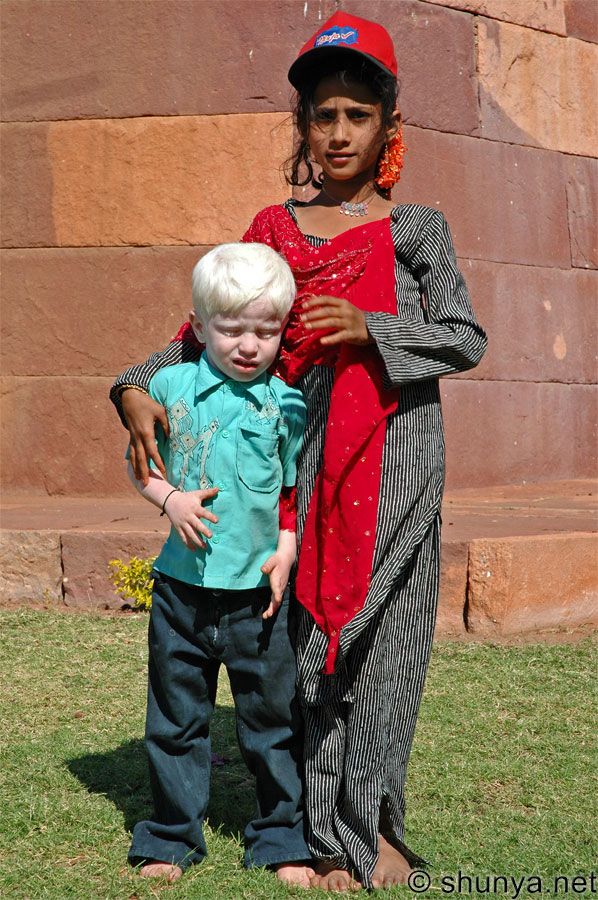
The word "albinism" refers to a group of inherited conditions. People with albinism have little or no pigment in their eyes, skin, or hair. they have inherited altered genes that do not make the usual amounts of a pigment called melanin. One person in 17,000 U.S.A. has some type of albinism. Albinism may affect people from all races. Most children with albinism are born to parents who have normal hair and eye color for their ethnic backgrounds. A common myth is that albinos have red eyes. In fact there are different types of albinism and the amount of pigment in the eyes varies. Although some individuals with albinism haave reddish or violet eyes, most of them has blue eyes. Some have hazel or brown eyes. However, all forms of albinism are associated with vision problems.
Vision Problems
People with albinism always have problems with vision which are not correctable with eyeglasses. The degree of vision impairment varies with the different types of albinism and many people with albinism are "legally blind," but most use their vision for many tasks includin reading and do not use Braille. Some people with albinism have sufficient vision to drive a car. Vision problems in albinism results from abnormal development of the retina and abnormal patterns of nerve connections between the eye and the brain. It is the presence of these eye problems that defines the diagnosis of albinism. Therefore the main test for albinism is simply an eye examination.
Skin Problems
While most people with albinism are fair in complexion, skin or hair color is not diagnostic of albinism. People with many types of albinism need to take precautions to avoid damage to the skin caused by the sun such as wearing sunscreen lotions, hats and sun-protective clothing.
Vision Problems
People with albinism always have problems with vision which are not correctable with eyeglasses. The degree of vision impairment varies with the different types of albinism and many people with albinism are "legally blind," but most use their vision for many tasks includin reading and do not use Braille. Some people with albinism have sufficient vision to drive a car. Vision problems in albinism results from abnormal development of the retina and abnormal patterns of nerve connections between the eye and the brain. It is the presence of these eye problems that defines the diagnosis of albinism. Therefore the main test for albinism is simply an eye examination.
Skin Problems
While most people with albinism are fair in complexion, skin or hair color is not diagnostic of albinism. People with many types of albinism need to take precautions to avoid damage to the skin caused by the sun such as wearing sunscreen lotions, hats and sun-protective clothing.


No hay comentarios:
Publicar un comentario