
viernes, 23 de enero de 2009

Albinism everywhere
 http://www.mlmp.org/art/images/albinomilkweed.jpg
Albinism can affect all living units, like plants, mammals, humans, fish, amphibian, reptiles, and birds. Albinism cannot be cured maybe in the future but recently there is no cure to this genetic disease. As said above, albinism is a genetic disease which makes it impossible to pass on by blood transfer, or other contact.
jueves, 22 de enero de 2009
Albinism
 http://www.shunya.net/Pictures/South%20India/Badami/PicnickingGirls01.jpg
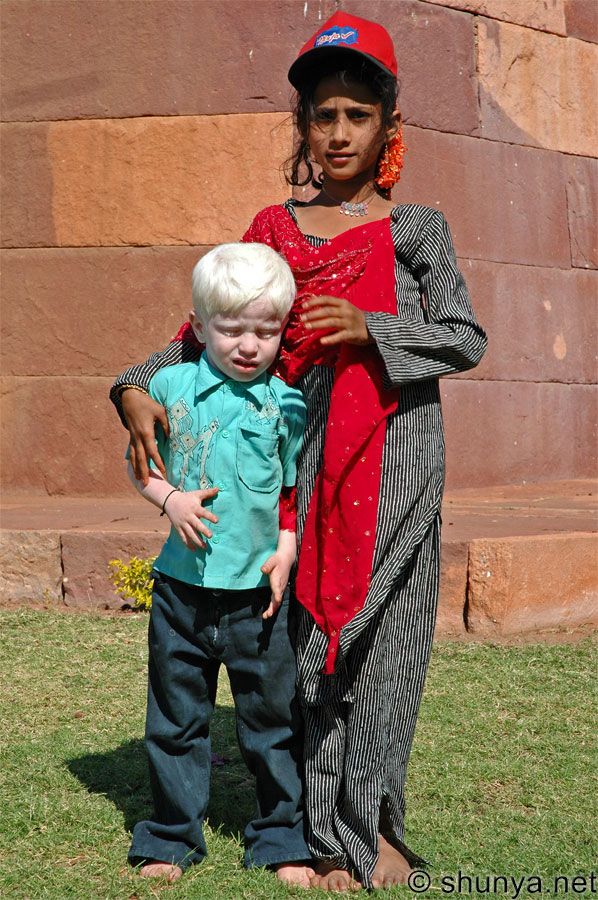
The word "albinism" refers to a group of inherited conditions. People with albinism have little or no pigment in their eyes, skin, or hair. they have inherited altered genes that do not make the usual amounts of a pigment called melanin. One person in 17,000 U.S.A. has some type of albinism. Albinism may affect people from all races. Most children with albinism are born to parents who have normal hair and eye color for their ethnic backgrounds. A common myth is that albinos have red eyes. In fact there are different types of albinism and the amount of pigment in the eyes varies. Although some individuals with albinism haave reddish or violet eyes, most of them has blue eyes. Some have hazel or brown eyes. However, all forms of albinism are associated with vision problems.
Vision Problems
People with albinism always have problems with vision which are not correctable with eyeglasses. The degree of vision impairment varies with the different types of albinism and many people with albinism are "legally blind," but most use their vision for many tasks includin reading and do not use Braille. Some people with albinism have sufficient vision to drive a car. Vision problems in albinism results from abnormal development of the retina and abnormal patterns of nerve connections between the eye and the brain. It is the presence of these eye problems that defines the diagnosis of albinism. Therefore the main test for albinism is simply an eye examination.
Skin Problems
While most people with albinism are fair in complexion, skin or hair color is not diagnostic of albinism. People with many types of albinism need to take precautions to avoid damage to the skin caused by the sun such as wearing sunscreen lotions, hats and sun-protective clothing.
Vision Problems
People with albinism always have problems with vision which are not correctable with eyeglasses. The degree of vision impairment varies with the different types of albinism and many people with albinism are "legally blind," but most use their vision for many tasks includin reading and do not use Braille. Some people with albinism have sufficient vision to drive a car. Vision problems in albinism results from abnormal development of the retina and abnormal patterns of nerve connections between the eye and the brain. It is the presence of these eye problems that defines the diagnosis of albinism. Therefore the main test for albinism is simply an eye examination.
Skin Problems
While most people with albinism are fair in complexion, skin or hair color is not diagnostic of albinism. People with many types of albinism need to take precautions to avoid damage to the skin caused by the sun such as wearing sunscreen lotions, hats and sun-protective clothing.
miércoles, 21 de enero de 2009
More about Albinism

http://www.popartuk.com/g/l/lg3734+brothers-albino-tiger-and-bengal-tiger-poster.jpg
Albinism is a lack of melanin pigments in the eyes, skin and hair. Albinism results from inheritance of recessive alleles. The condition is known to affect mammals (including humans), fish, birds, reptiles and amphibians.
Albinism is hereditary; it is not an infectous disease making it impossible to be transmitted through contact, blood transfusions, or other vectors. The principal gene which results in albinism prevents the body from making the usual amounts of the pigment melanin. Most forms of albinism are the result of the biological inheritance of genetically recessive alleles (genes) passed from both parents of the individual, though some rare forms are inherited from only one parent. There are also other genetic mutations which are proven to be associated with the albinism. All alterations, however, lead to changes in melanin production in the production in the body.
The chance of having an offspring with albinism results from the pairing of an organism with albinism and one without albinism is low, as discussed in more detail below. However, because organisms can be carriers of genes for albinism without exhibiting any traits, albinistic offspring can be produced by two non-albinistic parents.
Because organisms with albinism have skin that lacks the dark pigment melanin, which helps protect the skin from ultraviolet radiation coming from the sun, they can sunburn easily from everexposure. Lack of melanin in the eye also results in problems with vision, related and unrelated to photosensitivity.
Most humans and many animals with albinism appear white or very pale; the multiple types of melanin pigment are responsible for brown, black, gray, and some yellow colorations. In some animals, especially albinistic birds and reptiles, ruddy and yellow hues or other colors may be present on the entire body or in patches, due to the presence of other pigments unaffected by albinism such as porphyrins, pteridines and psittacins, as well as carotenoid pigments derived from the diet. some animals are white or pale due to opposite of albinism, an unusually high level of melanin pigmentation, is known as melanism, and result in an appearance darker than non-melanistic specimens from the same genepool.
The eyes of an animal with albinism occasionally appear red due to the underlying retinal blood vessels showing through there is not enough pigment to cover them. In humans this is a rare case, as a human eye is quite large and thus produces enough pigment to lend opacity to the eye, often colouring the iris pale blue. However, there are cases in which the eyes of an albinistic person appear red or purple, depending on the amount of pigments present. he albinistic are generally as healthy as the rest of their species, with growth and development occurring as normal, and albinism by itself does not cause mortality though the lack of pigment is an elevated risk for skin cancer and other problems. Many animals with albinism lack their protective camouflage and are unable to conceal themselves from their predators or preys; the survival rate of animals with albinism in the wild is usually quite low. However the novelty of albino animals has occasionally led to their protection.
All the information provided was taken and then rewritten from http://en.wikipedia.org/wiki/Albinism
Suscribirse a:
Entradas (Atom)


